Farm June Newsletter 2025

Dedicated farm line – 01626 357776

This newsletter is sent by e-mail to each vet practice but if you would like a copy sent to your individual e-mail account please contact us at dsfarm@axiomvetlab.co.uk and we can add you to our circulation list.


New more sensitive test for lungworm in cattle

We are pleased to be able to offer a PCR test for lungworm in cattle. As with the Baermann’s it detects the presence of larvae in the faeces (i.e. patent infections, from about 25 days post challenge). However, the PCR test does not require the larvae in faeces to be alive in order to obtain a positive result, which therefore increases the sensitivity. PCR tests are also usually more sensitive as they are able to detect very small amounts of an agent. Faecal samples should still be collected freshly voided or per rectum and kept cool until submission. Another benefit is that the test has been validated for the pooling of up to five samples, which makes it more cost effective to sample multiple animals. Ideally target animals that are coughing or showing suspicious respiratory signs. The turnaround time is the next working day, the test cost is £53 (& VAT) and the test code is PDVIV.


Sending ice packs with samples

For many tests, sending samples with an ice pack particularly in times of hot weather is a good idea to ensure the sample arrives with us in the best possible condition. If you are planning to do this, please can you make sure that the ice pack is placed inside the UN3373 courier bag packaging.


Average test values (ATVs) for dairy herds testing using blood serology

For herds that are testing using bloods rather than milks for Johne’s serology an average test value can still be calculated but it is not directly comparable to the target used for milks. The Johne’s Action Group has advised that the ATV for bloods should be provided on the declaration form for the herd but state that it has been derived from blood testing. Dairy farmers using Johne’s blood serology can monitor the trend of their herd’s ATVs over time. We will automatically provide an ATV for herds that are testing through the Axiom Johne’s Monitoring Programme (plus any historic values since they started testing through the programme). If one is required when doing a 60 cow screen please request this on the submission form.


We would like your feedback on our services

As part of our continuing effort to help improve our services to clients within the Laboratory Division we have put together a short survey which will be sitting live permanently for anyone to complete whenever they have a few minutes spare. This can be filled in by anyone who uses any of our services and we encourage feedback to help us understand what we are doing well and where we need to make improvements. The QR code and link to the survey will remain live as a continuous tool to enable us to always gather feedback. If anyone has any questions about this they are welcome to contact either of the Quality Managers at the Laboratories, Claire Richardson for Axiom Veterinary Laboratories and Susan Reeve for Finn Pathologists. Thank you in advance for helping us to improve our services.

https://www.surveymonkey.com/r/Laboratory_Satisfaction_Survey

Please use field kits with herd screens

When sending submissions containing 50+ bloods, please ensure that you use a Field Kit containing a polystyrene sample rack/box for the orderly transportation of your samples, remembering to populate the rack in the same order as your accompanying animal ID list. Receiving large quantities of blood samples in a plastic bag or cardboard box is not appropriate or conducive to the efficient handling of such submissions and invariably leads to significant delays in preparation and turnaround times. Field Kits (filled with the required serum gel tubes) are readily available to order via the following link…https://milab.store.unleashedsoftware.com/


Animal Health & Welfare Pathway – worm egg counts now available

Please note that we are now participating in the worm egg counting part of the AHWP for sheep. However, we are unable to post out sampling kits. Consumables can be ordered from us in the usual way. WHEN SUBMITTING POST TREATMENT SAMPLES, PLEASE ENTER THE ACCESS (REPORT) NUMBER FOR THE PRE-TREATMENT SAMPLE RESULTS AS A PREVIOUS REFERENCE ON THE SUBMISSION FORM. We can then provide you with a % change in the strongyle egg count after treatment.
We are a UKAS accredited lab and provide ISO17025 accredited tests so we can carry out any of the follow up endemic disease testing for both cattle and sheep.

The diseases and conditions to be sampled for sheep include:
Border disease (BD), caseous lymphadenitis (CLA), enzootic abortion of ewes (EAE), Johne’s disease, Maedi Visna (MV), toxoplasmosis, tick-borne fever, pulpy kidney, lamb dysentery, ewe nutrition status, lamb nutrition status & trace elements. For cattle, a biosecurity assessment relating to BVD virus needs to be done in discussion with the farmer. This needs to cover whether or not it is appropriate for the herd to join a BVD accreditation programme. Membership is not compulsory, as many commercial herds may not be able to meet the rule requirements, particularly the requirement for a minimum three-metre biosecure gap. Vaccination also needs to be discussed – again it is not compulsory for it to be put in place though it is a good insurance policy until the country is further down the route of eradicating BVD virus. From the BVD check test results coming through the lab the vast majority of herds appear to be free of infection so could be becoming more and more naïve with time if they are not vaccinating. The impact of a BVD incursion, without the protection from BVD vaccination, could have a serious financial impact on a herd. Although a herd may be closed and appear to be well isolated we have seen breakdowns occurring due to the suspected transfer of virus on equipment or clothing.

Would you like to send the Axiom farm vets photos of PMEs to allow us to assist with sample selection and diagnosis? Please send photos by WhatsApp to 07944 649222.

Please provide your name, practice, the farmer and farm names so that we can link the photos to the relevant submission and please also indicate which Axiom vet you discussed the case with. We may wish to use some of the photos in our newsletter so please indicate if you are not happy for this to be done. All cases are anonymised and credited to the submitting vet. Please note that this number is just for sharing photos. If you wish to discuss a case for which you do not have photos, please ring 01626 357776 as usual.


BVD Cymru accredited lab

We are an accredited lab for the Welsh BVD eradication programme. BVD antibody and antigen results will be uploaded if samples are submitted on a BVD Cymru form. As was the case with BVD Free England, there is a small charge for the uploading of the results of 50p per sample for BVD antibody testing and 25p for a BVD antigen test.
Please note that all fields on the BVD Cymru submission form must be completed (including the keeper’s phone number and email address) otherwise there is a block on the results uploading.


Discounted test rates for Johne’s disease & Neospora herd screens or regular batch testing

Our Johne’s & Neospora Monitoring programmes give farmers access to discounted test rates for whole herd or regular batch testing. There is no membership fee and no set rules to follow. Johne’s serology is from £4.25 per sample and Neospora serology costs from £5.90 per sample. It works out cheaper than testing through a CHECS cattle health scheme so is ideal for herds that are testing for disease control and management purposes. Advice is provided in the lab report and farmers can be e-mailed a copy if required. Our turnaround times are very fast– often same day but within three working days for both tests. Batch testing herds also get their results in a cumulative spreadsheet. Contact us for more information at dsfarm@axiomvetlab.co.uk or on 01626 357776.
In order to avoid any unnecessary confusion, please can we ask that submission forms are only sent in with the samples and not in advance of the samples. Thank you for your cooperation.


Did you know that you can email us any additional test requests for your submissions?

You may find this is a more efficient way of making requests than phoning the farm team, saving you time in your busy day. Our farm team also find it a more efficient way of dealing with your requests.
The email address for test requests is: DSFarm@axiomvetlab.co.uk

Interesting cases in May

Cattle
Abortions and mastitis

  • BVD viraemia was suspected on BVD antigen ELISA testing of foetal fluid in a calf aborted at five months gestation.
  • Salmonella Dublin was isolated from the stomach contents of a calf aborted at four to five months gestation in a dairy herd that had been intermittently positive on S. Dublin bulk milk serology. The cow had been pyrexic (39.6oC) prior to aborting. S. Dublin was also isolated from two vaginal swabs from maiden heifers that were aborting in a Holstein-Friesian herd where there had been a history of Salmonella infection in the same field following turnout the previous year.
  • Trueperella pyogenes was isolated from the stomach contents of a foetus aborted at seven months gestation. T. pyogenes associated abortion often follows development of a septic focus or systemic illness in the dam.
  • Several cases of Neospora associated abortion were suspected with the detection of Neospora on PCR in foetal tissues and seroconversion of aborting cows. Confirmation of neosporosis requires histopathology of foetal heart and ideally foetal brain.

Respiratory disease

  • Cases of IBR diagnosed on PCR testing included on pooled nasal swabs from two dairy heifers with milk drop, pyrexia, nasal discharge and increased lung and tracheal sounds on auscultation. Active seroconversion to IBR was also reported in one herd.
  • Cases of PI3 infection diagnosed on PCR testing included in mixed batches of calves in one herd, all of which were sick and exhibiting respiratory signs, nasal and ocular discharge, as well as scour.
  • Cases of RSV infection diagnosed on PCR testing included a bought in calf that developed acute pneumonia and died after five days despite antibiotic treatment. On PME, there was widespread fibrinopurulent pleurisy and, in addition to RSV being detected, Mannheimia haemolytica and Pasteurella multocida were also detected, consistent with secondary bacterial infection.
  • Coronavirus was detected by PCR on several occasions, either as the sole viral agent or in mixed infections with other viruses. The role of coronavirus in bovine pneumonia is not clear. It may be significant as part of a mixed infection but may also be found in the respiratory tract of healthy animals.
  • A heifer bought in to a herd lost weight rapidly over the first two weeks. Heart sounds were muffled on auscultation due to increased respiratory rate and effort and the animal was pyrexic (40.1oC). The heifer was treated symptomatically and concerns over lungworm were confirmed with a positive Baermann’s test.
  • One of a number of dopey calves born in a herd died at 36 hours of age. Calving had been going very well until recently when there had been several losses. On PME, the urachus appeared congested and petechiae and oedema were present throughout the tissues. Histopathology detected a severe, fulminating bacterial pneumonia, the most likely cause of which was Mannheimia haemolytica. There was some proteinaceous material seen, raising the possibility of milk aspiration, but it was not possible to determine if this predisposed to the bacterial pneumonia or was a result of the pneumonia. Minimal meconium was also seen in the lung, which could suggest a degree of distress at calving, and this also may have predisposed to a bacterial infection. Other risk factors for bacterial pneumonia include failure of passive transfer, underlying disease, mineral deficiencies and stress.

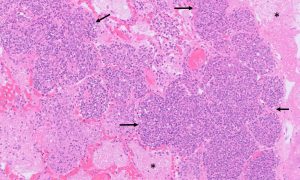
Abundant degenerate neutrophils

Abundant degenerate neutrophils (often with streaming nuclei; oat cells) (arrows) and fibrin (*) in a calf with fulminating bacterial pneumonia likely caused by Mannheimia haemolytica

Gastrointestinal disease

  • A five-week-old calf died relatively suddenly and, on PME, the abomasum was necrotic and haemorrhagic. Histopathology was consistent with a marked acute abomasitis. No fungal organisms were seen and this was likely to be a bacterial abomasitis, however the exact cause was not determined on histological examination. Potential underlying factors can include inadequate milk administration, large milk feedings, cold milk, carbohydrate-rich lacto replacer, oesophageal tube feeding or inadequate equipment hygiene. Potential bacterial pathogens include Clostridium perfringens type A, Sarcina species, E. coli, Lactobacillus species and Campylobacter species.
  • A group of two-month-old calves at pasture were ill thrifty and had loose faeces. A faeces sample detected > 50,000 epg of Toxocara vitulorum. This ascarid nematode undergoes a period of arrested development in the somatic tissues of adult cattle and is transmitted to suckling calves via the milk. It may cause ill thrift and scour and sometimes slight abdominal distension in calves up to six months old.
  • Elevated pepsinogen levels consistent with significant abomasal parasitism were reported in several animals, with ill thrift being the most commonly reported clinical sign.
  • Several cases of fasciolosis were diagnosed on coproantigen ELISA and faecal microscopy. Clinical signs included ill thrift and bottle jaw. An inappetant, thin Longhorn heifer with decreased rumen activity was strongly seropositive for liver fluke, suggesting current infection, and the animals also had evidence of vitamin A deficiency.
  • Salmonella Typhimurium was isolated on at least four occasions this month. Three cases occurred in cows that had recently calved; a Hereford cross suckler cow and two Holstein-Friesian dairy cows in different herds. All three had watery scour, two were reported to be dull and one was reported to be pyrexic (40.3oC).
  • At least two cases of Salmonella Dublin associated scour were reported this month.
  • Salmonella Enteriditis was isolated from a faeces sample from a dairy herd where presumably animals were scouring. This serotype is rarely reported in cattle and is more commonly reported in chickens.
  • A total of 518 submissions for Johne’s disease serology and faecal PCR testing from cattle were received this month, with 164 submissions, including a total of 295 individual samples, testing positive. The youngest animal reported this month was 17 months old.

Skin and eye disease

  • A suckler cow developed abscesses primarily over the throat and neck with some extending over the remainder of the body. Streptococcus dysgalactiae was isolated in pure heavy growth from a sample of pus and, although mainly associated with mastitis, this can act as an opportunistic pathogen in other infections e.g. secondary to skin trauma.
  • Tissues were received from a fourth lactation British Friesian cow which, over the course of a few days following turn out, developed hardened, thickened skin over one side, similar to photosensitisation although the cow was black in colour. There was no known history of toxin ingestion or chemical treatments. Histopathology was consistent with a severe necrotising dermatitis and changes suggested an outside-in process. Possible differentials included a radiation burn, thermal burn or chemical burn. We understand that subsequently all the affected skin sloughed and was left to heal by second intention, and that the cow’s condition is improving.

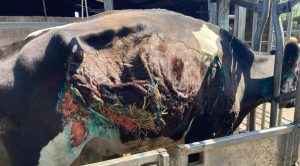
Severe necrotising dermatitis

Severe necrotising dermatitis in a British Friesian cow (photo: Eleanor Stafford, Axe Valley Large Animal Vets)

Systemic and miscellaneous disease
  • A total of 449 submissions were received for BVD antigen testing in cattle this month, with 41 submissions, including a total of 63 individual samples, testing positive. In one case, an 18-month-old heifer had dramatic weight loss over the three weeks following turnout and developed haemorrhagic diarrhoea, consistent with a diagnosis of mucosal disease. The animal was the only one affected in the group.
  • At least seven animals were diagnosed with MCF on PCR testing of heparin blood samples. Presenting signs reported included pyrexia, uveitis, corneal oedema, nasal discharge and encrusted nares. One infected Limousin cow was reported to be improving seven days after developing clinical signs. MCF is only very rarely non-fatal. If they do survive, they tend to fail to thrive or relapse.
  • Babesiosis was confirmed on blood film examination in two Limousin heifers, that calved six weeks earlier and then developed haematuria, pyrexia and anaemia. Both had been bought in to a herd in North Wales from a non-tick infested lowland farm.
  • Tick borne fever was diagnosed in a four-month-old suckler calf in Devon that was pyrexic, ataxic and tachypnoeic. Ticks were seen on the calf and Anaplasma phagocytophilum was detected by PCR in an EDTA blood sample. In a suckler herd in the Scottish Borders, a two-year-old heifer that had calved one month previously was pyrexic (40.2oC), depressed and had a stiff gait. The heifer was grazing a hill covered in ticks and seroconverted strongly to A. phagocytophilum on IFAT, suggesting that this was also a case of Tick Borne Fever.
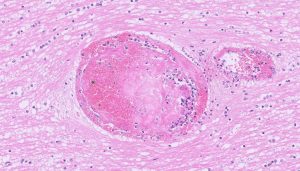
  • Brain was received for histopathology from the fourth 14-month-old fattening heifer to die acutely after developing signs suggestive of meningitis. This revealed a severe, acute, necrohemorrhagic and suppurative meningoencephalitis with vasculitis and intralesional bacterial emboli, typical of that seen with thrombotic meningoencephalitis associated with Histophilus somni infection. This is commonly seen in post-weaned cattle up to 18-months of age with animals presenting with sudden onset neurological signs, recumbency and depression prior to death.

Vasculitis and thromboembolism

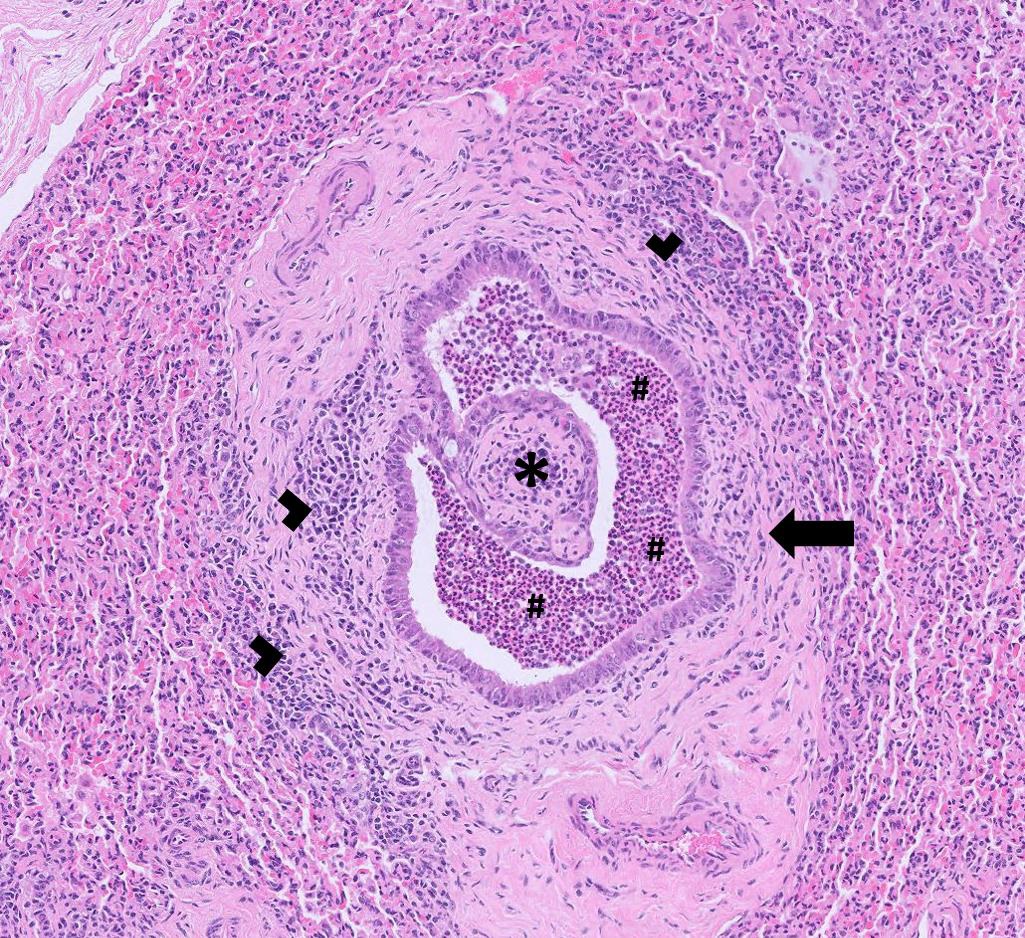
Vasculitis and thromboembolism of a vessel in the brain of a fattening heifer with histophilosis

  • One eight-month-old dairy heifer was found with a swelling over its back. It became recumbent, went into shock, and was therefore euthanased. PME detected black, emphysematous muscle over the lumbar spine and blackleg was confirmed with the detection of Clostridium chauvoei on IFAT of a muscle impressions smear. In a second animal, a 16-month-old Holstein-Friesian heifer that died acutely at grass, IFAT testing for C. chauvoei and C. septicum was negative but histopathology detected a necrohaemorrhagic myositis with emphysema and intralesional bacteria, consistent with clostridial myositis. ‘Pseudoblackleg’ can also be caused by Clostridium novyi type A, C. perfringens type A and C. sordellii.
  • In one suckler herd, multiple suckler calves were becoming sick and depressed, and developing signs of pneumonia from four days old up to a few months of age. Calves were improving with antibiotics and NSAIDs but there were several poor doing calves. Two calves died suddenly and Salmonella Dublin was isolated from the spleen of one of the calves. S. Dublin septicaemia was also confirmed in an Aberdeen Angus calf on histopathology and tissue culture in a second herd.
  • A large slow growing mass over the left shoulder of a four-year-old South Devon cow was determined to be a mass of dense collagenous tissue on histopathology containing a sparse to moderately cellular population of spindle shaped cells. This was consistent with low-grade spindle cell proliferation, potentially part of a fibroma or fibropapilloma.

Sheep and goats

Abortion, infertility and mastitis

  • Salmonella 61:k:1,5,7 was isolated from the stomach contents of a foetus aborted by a ewe in a Swaledale flock undergoing a higher rate of abortion than in most years. This is a sheep adapted strain and is a variant of S. diarizonae ssp. enterica.
  • Staphylococcus aureus was isolated from at least two cases of mastitis this month. This is one of the two most common causes of severe mastitis in sheep.

Respiratory disease

  • Pneumonic pasteurellosis was suspected to be the cause of death in one of a number of three-week-old lambs dying acutely, despite the ewes being vaccinated against pasteurellosis. On PME, the lungs were consolidated and there was evidence of a fibrinopurulent pleurisy, and Mannheimia haemolytica was isolated in pure growth from a sample of lung. Bacterial bronchopneumonia was also diagnosed on histopathology in a lamb from a second flock with cases of sudden death in three-week old lambs.

Gastrointestinal disease

  • Coccidiosis was confirmed in a group of 12 four to five-week-old lambs, 5% of which had scour. 23% of a faecal oocyst count of > 50,000 opg was found to be one of the pathogenic Eimeria species E. ovinoidalis.
  • Parasitic gastroenteritis was diagnosed in several submissions including a group of scouring four-month-old Texel lambs with a strongyle egg count of 1300 epg. PGE and severe bacterial bronchopneumonia were diagnosed on a faecal egg count (4250 epg) and lung histopathology respectively in a one of a number of ewes to die in a second flock.
  • Nematodirosis was likely to have been the cause of watery scour in a four-month-old male goat kid with a N. battus count of 200 epg in a faeces sample. It may also have been the cause of scour in a group of pre-weaned lambs in good body condition with one or two scouring, with the finding of a N. battus count of 128 epg in an AHWP pre-treatment faeces sample however there was also a high coccidial oocyst count (85,160 opg) but speciation was not carried out. Nematodirosis was also diagnosed in a group of scouring four-month-old Texel lambs.
  • Two recently lambed ewes died over a weekend and a further two animals were found to be recumbent and had white mucous membranes. One recumbent ewe also had pneumonia and the whole flock was in poor body condition. In house strongyle egg counts of 1804 epg in a recumbent ewe and 1643 epg in a pooled sample from other ewes raised the suspicion of haemonchosis and a peanut agglutinin test identified 60% of the eggs as H. contortus, supporting the suspicion. In a second flock, five out of 20 sheep had died and a PME detected large numbers of nematodes in the abomasum, which looked suspicious of Haemonchus on in house microscopy. A peanut agglutinin test revealed that 95% of the eggs in the faeces were H. contortus, confirming the diagnosis. Haemonchosis was also confirmed in an acutely unwell, anaemic goat with an in house strongyle egg count of 14,989 epg of which 72% were identified as H. contortus on peanut agglutinin testing and in at least two further sheep flocks. Cases of suspected haemonchosis where confirmatory peanut agglutinin testing was not carried out included a two-year-old Southdown ewe, which had pale mucous membranes and liver, suggesting anaemia, and enteritis on PME, and a strongyle egg count of 9350 epg. Epsilon toxin was also detected by clostridial toxin ELISA in small intestinal contents, raising the possibility of terminal pulpy kidney, although this can also be found in the small intestinal contents of healthy animals. Another case was seen in a ewe that was thin and pyrexic, with pale mucous membranes and bottle jaw, and had a strongyle egg count of 6200 epg. SCOPS highlighted the growing concern over rising Haemonchus cases in the UK in a recent letter to the Veterinary Record (Vol. 196, No. 12, 21/28 June, 2025).
  • Several cases of treatment failure were reported on AHWP Worming Treatment Checks suggesting that follow up investigation of the possibility of anthelmintic resistance was warranted.
  • Fasciolosis was detected on microscopy in one of three samples from a flock where four ewes had died and two were showing signs of bottle jaw, and on liver fluke coproantigen ELISA in a ram exhibiting weight loss.
  • A total of 86 submissions for Johne’s disease serology and faecal PCR testing were received from sheep and goats this month, with 18 submissions, including a total of 19 individual samples, testing positive. Ill thrift was the main presenting sign, followed by scour and, in one goat, inappetance and lethargy.

Skin and eye disease

  • Orf was confirmed on PCR testing of skin lesions in a flock of 14 North Ronaldsay sheep, all 14 of which were showing consistent clinical signs.


Systemic and miscellaneous disease

  • Louping Ill was suspected on serology in a ewe in a flock in which a number of ewes were dying, some after developing neurological signs. The animal was seropositive for Louping ill virus on HAIT with a Total Ig of 1/1280 and IgG of 1/40. Therefore, the majority of antibody present was IgM, consistent with recent exposure to LIVA four-week-old bottle fed lamb developed joint ill and was lame on the right fore, going on to develop an abscess on the point of the shoulder from which yellow-green pus was drained. CLA was suspected but Streptococcus dysgalactiae was isolated. It was also isolated from an aspirated joint from a lamb in a flock with a higher than average number of cases of joint ill this year. This is the most common cause of joint infections in young lambs.
  • Trueperella pyogenes was isolated from a recurring facial abscess on a two-year-old Valais Blacknose ewe.
  • Tick pyaemia was confirmed in one of three lambs to die suddenly at grass over a couple of days. PME revealed signs of bacterial spread, with lesions in the heart, kidney and diaphragm. Histopathology detected multifocal random suppurative nephritis, pneumonia, hepatitis and marked myocarditis with intralesional bacteria, and a suppurative meningoencephalitis. Staphylococcus aureus was isolated from the heart and kidney. S. aureus was also isolated from the elbow joint of a lamb; this being another relatively common cause of arthritis in lambs and is usually a complication of tick pyaemia. A potential third case was seen in a one-month-old lamb that died acutely. On PME, there were multifocal abscesses in lung and kidney and histopathology of heart detected a fibrinosuppurative and necrotising endocarditis associated with gram-positive cocci. It was likely that there had been seeding of bacteria to the lung, kidney and liver resulting in multifocal necrosis and abscessation.

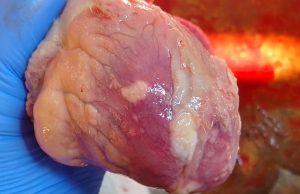
Pale lesions

Pale lesions consistent with myocarditis in a lamb with tick pyaemia (Photo: Jess Kebbell, Derwent Vale Farm Vets)
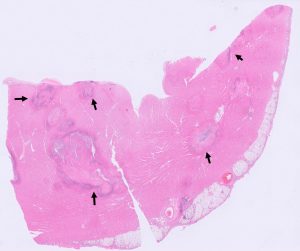
Multifocal areas

Multifocal areas of suppurative myocarditis (arrows) in the heart of a lamb with tick pyaemia


  • Post-mortem tissues were received from a five-week-old lamb from a group of approximately 270 pet lambs that was experiencing lamb losses daily. This sick lamb was euthanased and was found to have consolidated lungs and abnormal kidneys on PME. There was a severe, multifocal to coalescing, chronic-active, suppurative nephritis with interstitial fibrosis on histopathology. In places, these formed wedge-shaped lesions consistent with chronic infarcts and it was not possible to determine the initial insult due to the chronicity. A haematogenous bacterial infection seemed the most likely cause with the infarcts potentially a result of bacterial emboli occluding vessels. There was also a severe, acute fulminating bacterial pneumonia probably secondary to the kidney lesions that likely contributed or caused the ultimate death of the lamb. E.coli was isolated from lung and could have been involved in the renal lesions. Potential underlying causes included inadequate colostral antibody uptake, high bacterial loads in pens and concurrent disease or deficiency.
  • A two-year-old male sheep died 24 hours after becoming lethargic with respiratory signs. A PME detected petechial haemorrhages throughout the carcass, oedematous lungs and fibrin strands in the pleural and peritoneal cavities. The bladder was distended with urine and the mucosa was black. The pelvis of both kidneys was distended with urine and uroliths. On histopathology, there was a severe haemorrhagic, neutrophilic and ulcerative cystitis. There was also multifocal fibrin thrombus formation in the alveolar capillaries of the lung potentially consistent with endotoxaemia/sepsis-induced disseminated intravascular coagulopathy. Crystalline material was present in the renal pelvis, compatible with remnants of uroliths, and mild suppurative inflammation was found in a few tubules, associated with bacteria and likely indicating very early pyelonephritis. Uroliths can lead to an increased risk of infection, including pyelonephritis and the isolation of E. coli from urine and kidney may well have been significant in this respect. The uroliths were composed of apatite (calcium phosphate) and cereal based rations high in phosphorus predispose to their formation.

Deficiencies and toxicities

  • Cobalt deficiency was suspected on the basis of low vitamin B12 levels in four alpacas from different holdings with varying clinical presentations. One was a two-year-old female alpaca with condition loss, a second also had condition loss and malaise despite treatment of gastrointestinal parasitism, another was reported to have hyperkeratosis and the fourth had sudden onset blindness and other neurological signs when handled. Cobalt deficiency in camelids is associated with weight loss despite good appetite, anaemia, weakness and muscle atrophy, so the significance of the low vitamin B12 levels in the latter two cases is uncertain.
  • Low vitamin B12 was also identified in several goats mostly in ill thrifty animals and animals with poor coat condition or ‘scurfy coats’.
  • ‘Pine’ due to cobalt deficiency was thought to be the cause of poor body condition in a group of young ewes when five of six animals tested were shown to have low vitamin B12 levels, with the remaining animal having a marginal result for vitamin B12.
  • In two goat cases, there was evidence of both cobalt and copper deficiency. In both these cases, the history was of ill thrift and in one; the goats were also showing signs of itching and hair loss.
  • Copper and selenium deficiency were identified in a 21-month old heifer, which was described as having ‘the weight falling off her’.
  • A low copper level was found in a liver tissue sample from a four-month-old heifer calf. The clinical history and post mortem findings were not described though it was noted the farmer was concerned about White Muscle Disease due to a history of low selenium on the farm. In this sample, the liver copper level was 51umol/kg DM (Ref 314-10,000μmol/kg DM) consistent with copper deficiency and manganese was marginal, but selenium was within reference range.
  • Three four-month-old goats from the same farm had gone off their legs and showed partial response to vitamin E and selenium treatment. The two animals had hypocupraemia (mean value 1.7μmol/l, reference interval 9-25.0 μmol/l) which was thought to be a significant factor and suggested that the cause of the recumbency was delayed swayback/enzootic ataxia.
  • Five lambs out of a group of 200 were showing signs of hindlimb ataxia. All three animals tested had low to very low blood copper levels consistent with a suspected diagnosis of delayed swayback.
  • Low copper levels were found in all four tested suckler cows on a farm, which had a history of weak calves at birth, which went on to, develop E.coli diarrhoea. In the same group of cows the pooled PII level was very high at >2000 ug/l. A study involving sheep found that lambs born to ewes with high iodine intakes had poorer colostral absorption and limited studies in cattle have suggested similar findings. It was considered possible that copper deficiency or high iodine intakes or a combination of both could be contributing to the problem in the calves.
  • Hypocupraemia was also seen on farms with histories of small/ill thriven calves being born, musculoskeletal abnormalities in newborn calves, poor fertility, scouring in adult suckler cows and in a cow that was down in the field three months post calving due to a suspected bulling injury.
  • Several in a group of thirty housed yearling cattle were either down or knuckling over on the fetlock joint of the hindlimbs. One of the affected animals was blood sampled and had a low GSH-Px level consistent with selenium deficiency. The group were on diet of silage, straw and barley with no minerals added to the diet.
  • A group of suckler cows, which were in poor condition, were tested for trace element status and all of the five tested animals had low GSH-Px levels consistent with selenium deficiency. Three of the five also had low copper levels and all five had low urea levels indicating insufficient levels of rumen degradable protein in the diet.
  • Low zinc levels were seen in several cases with one of the farms reporting that their heifers looked in poor condition after being left out too long in winter.
  • Hypocalcaemia was seen in a number of recently calved down cows. One farm reported an increase in retained foetal membranes and one cow had gone down with suspected hypocalcaemia and later died. One older cow on this holding, which had calved 36 hours previously, was found to be hypocalcaemic with a calcium level of 1.8mmol/l and had a magnesium level of 0.74mmol/l, which is within the Axiom reference interval of 0.7- 1.3mmol/l but could be considered marginal. A cow which had calved seven days previously was found to have a suboptimal urea at 2.0mmol/l (optimal urea >3.6mmol/l). The cows were calving indoors on a silage diet with no additional concentrates/ supplements.
  • A cow which was found down in the field two weeks after calving and was in poor body condition was found to be hypocalcaemic (1.98mmol/l Reference interval 2.0-3.0mmol/l) and hypophosphataemic (0.67mmol/l Reference interval 1.10-2.50mmol/l) and had mildly raised creatine kinase and aspartate transaminase indicative of a degree of muscle tissue damage.
  • A Hereford cow which had died suddenly due to suspected staggers had a vitreous humour magnesium level of 0.48mmol/l, a level supportive of a diagnosis of death due to hypomagnesaemic tetany (staggers)
  • A ewe, which isolated herself from the flock around two weeks after lambing, started to seizure when approached and died shortly after. Testing of ocular fluids indicated that hypomagnesaemia was the likely cause of death.
  • Low PII results indicative of low dietary iodine intakes were seen in numerous cases with a variety of clinical histories. In cattle, it was associated with reduced fertility, poor doing cows, retained cleansings, extended gestation length (not thought to be connected to any particular sire) and on a farm which had a history of congenital blindness in calves (with some response to vitamin A supplementation) . In sheep, low PII was seen in a flock where ‘dopey’ lambs had been born and a history of ewes grazing brassicas while pregnant.
  • A calf, which died following an episode of respiratory distress / syncope, was found to have a low vitamin E level. GSH-Px testing found no evidence of selenium deficiency. It was reported that the heart appeared large and thin walled at post mortem examination but no histopathological abnormalities were seen on the section of fixed heart tissue submitted.
  • All eight Jersey cows tested were found to have raised BHB levels on a farm, which had a history of ketotic episodes and cows not returning to cyclicity following calving.
  • Hypogammaglobulinaemia was identified in a three-day-old calf, which was very weak, floppy, and unable to stand, and which the attending vet suspected had colisepticaemia. Total protein was low at 42g/l. This was suggestive of poor transfer of passive immunity (TPI) using recommended targets for assessing transfer of passive immunity in calves aged 24 hours to 7 days old that have received maternal colostrum.
  • Post-mortem tissues were received from an Island sheep ewe, the second sheep to go down two to three days post lambing. The ewe appeared blind, stargazing and was in lateral recumbency. A PME was carried out and sections of brain were submitted for histopathology. A necrotising polioencephalopathy was seen, suggestive of cerebrocortical necrosis. This was most likely a thiamine dependent encephalopathy, but sulphate toxicity was another possible cause that could account for the changes seen. The former is commonly associated with recent changes in diet resulting in rumen dysbiosis and the production of thiaminase with subsequent vitamin B1 deficiency. Sulphate toxicity is associated with excess intake through either concentrate food and/or water.

Camelids

  • Fasciolosis was diagnosed in a camel on faecal microscopy.
  • An adult male alpaca with loose faeces and weight loss had an in house strongyle egg count of 1450 epg, consistent with parasitic gastroenteritis. As there had been a previous case of Johne’s disease in the herd, a faecal PCR was run which was positive.
  • A recumbent, thin adult female llama with pale mucous membranes had a strongyle egg count of 1150 epg strongyles, consistent with parasitic gastroenteritis and raising the possibility of haemonchosis, although peanut agglutinin testing was not carried out. There was also evidence of nematodirosis and Trichuris infestation, with counts of 400 epg Nematodirus sp. 250 epg Nematodirus battus and 6150 epg Trichuris sp., the latter being pathogenic in camelids. An 18-month-old female alpaca that had been losing weight and not eating had a N. battus egg count of 1650 epg and a Trichuris egg count of 900 epg. The animal was not scouring but counts of this magnitude are potentially significant in alpacas of any age. Parasitic gastroenteritis was also diagnosed in a scouring alpaca with a strongyle egg count of 1850 epg.
  • Tissues were received from a six-year-old female alpaca with a history of inappetence, recumbency and poor body condition score. Lung, adrenal and an unidentified tissue were effaced by neoplastic epithelial cells consistent with squamous cell carcinoma, with evidence of lymphatic invasion. This is not an uncommon neoplasm of camelids, with skin and stomach being common primary sites. When spread occurs, it is usually to the local lymph nodes in the first instance but, as in this case, has potential to spread throughout the body.

Other Species


  • A recumbent, unresponsive male reindeer with watery scour had a strongyle egg count of 600 epg, suggesting that parasitic gastroenteritis was a contributory factor.

Follow us on Facebook

https://www.facebook.com/Axiomfarmvetlab/

This newsletter is sent by e-mail to each vet practice but if you would like a copy sent to your individual e-mail account please contact us at dsfarm@axiomvetlab.co.uk and we can add you to our circulation list.

Related Posts