Farm May Newsletter 2025

Dedicated farm line – 01626 357776

This newsletter is sent by e-mail to each vet practice but if you would like a copy sent to your individual e-mail account please contact us at dsfarm@axiomvetlab.co.uk and we can add you to our circulation list.


Average test values (ATVs) for dairy herds testing using blood serology

For herds that are testing using bloods rather than milks for Johne’s serology an average test value can still be calculated but it is not directly comparable to the target used for milks. The Johne’s Action Group has advised that the ATV for bloods should be provided on the declaration form for the herd but state that it has been derived from blood testing. Dairy farmers using Johne’s blood serology can monitor the trend of their herd’s ATVs over time. We will automatically provide an ATV for herds that are testing through the Axiom Johne’s Monitoring Programme (plus any historic values since they started testing through the programme). If one is required when doing a 60 cow screen please request this on the submission form.


We would like your feedback

As part of our continuing effort to help improve our services to clients within the Laboratory Division we have put together a short survey which will be sitting live permanently for anyone to complete whenever they have a few minutes spare. This can be filled in by anyone who uses any of our services and we encourage feedback to help us understand what we are doing well and where we need to make improvements. The QR code and link to the survey will remain live as a continuous tool to enable us to always gather feedback. If anyone has any questions about this they are welcome to contact either of the Quality Managers at the Laboratories, Claire Richardson for Axiom Veterinary Laboratories and Susan Reeve for Finn Pathologists. Thank you in advance for helping us to improve our services.

https://www.surveymonkey.com/r/Laboratory_Satisfaction_Survey

Please use field kits with herd screens

When sending submissions containing 50+ bloods, please ensure that you use a Field Kit containing a polystyrene sample rack/box for the orderly transportation of your samples, remembering to populate the rack in the same order as your accompanying animal ID list. Receiving large quantities of blood samples in a plastic bag or cardboard box is not appropriate or conducive to the efficient handling of such submissions and invariably leads to significant delays in preparation and turnaround times. Field Kits (filled with the required serum gel tubes) are readily available to order via the following link… https://milab.store.unleashedsoftware.com/


Animal Health & Welfare Pathway – worm egg counts now available

Please note that we are now participating in the worm egg counting part of the AHWP for sheep. However, we are unable to post out sampling kits. Consumables can be ordered from us in the usual way. WHEN SUBMITTING POST TREATMENT SAMPLES, PLEASE ENTER THE ACCESS (REPORT) NUMBER FOR THE PRE-TREATMENT SAMPLE RESULTS AS A PREVIOUS REFERENCE ON THE SUBMISSION FORM. We can then provide you with a % change in the strongyle egg count after treatment.
We are a UKAS accredited lab and provide ISO17025 accredited tests so we can carry out any of the follow up endemic disease testing for both cattle and sheep. The diseases and conditions to be sampled for sheep include: Border disease (BD), caseous lymphadenitis (CLA), enzootic abortion of ewes (EAE), Johne’s disease, Maedi Visna (MV), toxoplasmosis, tick-borne fever, pulpy kidney, lamb dysentery, ewe nutrition status, lamb nutrition status & trace elements.

Would you like to send the Axiom farm vets photos of PMEs to allow us to assist with sample selection and diagnosis? Please send photos by WhatsApp to 07944 649222.

Please provide your name, practice, the farmer and farm names so that we can link the photos to the relevant submission and please also indicate which Axiom vet you discussed the case with. We may wish to use some of the photos in our newsletter so please indicate if you are not happy for this to be done. All cases are anonymised and credited to the submitting vet. Please note that this number is just for sharing photos. If you wish to discuss a case for which you do not have photos, please ring 01626 357776 as usual.

BVD Cymru accredited lab

We are an accredited lab for the Welsh BVD eradication programme. BVD antibody and antigen results will be uploaded if samples are submitted on a BVD Cymru form. As was the case with BVD Free England, there is a small charge for the uploading of the results of 50p per sample for BVD antibody testing and 25p for a BVD antigen test.
Please note that all fields on the BVD Cymru submission form must be completed (including the keeper’s phone number and email address) otherwise there is a block on the results uploading.

Discounted test rates for Johne’s disease & Neospora herd screens or regular batch testing

Our Johne’s & Neospora Monitoring programmes give farmers access to discounted test rates for whole herd or regular batch testing. There is no membership fee and no set rules to follow. Johne’s serology is from £4.25 per sample and Neospora serology costs from £5.90 per sample. It works out cheaper than testing through a CHECS cattle health scheme so is ideal for herds that are testing for disease control and management purposes. Advice is provided in the lab report and farmers can be e-mailed a copy if required. Our turnaround times are very fast– often same day but within three working days for both tests. Batch testing herds also get their results in a cumulative spreadsheet. Contact us for more information at dsfarm@axiomvetlab.co.uk or on 01626 357776.
In order to avoid any unnecessary confusion, please can we ask that submission forms are only sent in with the samples and not in advance of the samples. Thank you for your cooperation.

Did you know that you can email us any additional test requests for your submissions?

You may find this is a more efficient way of making requests than phoning the farm team, saving you time in your busy day. Our farm team also find it a more efficient way of dealing with your requests.
The email address for test requests is: DSFarm@axiomvetlab.co.uk

Interesting cases in March

Cattle
Abortions and mastitis

  • BVD virus was detected by the BVD antigen ELISA in foetal fluids in three abortion cases.
  •  Salmonella Dublin was cultured from an abortion case from a farm that had had four recent abortions and there were issues with diarrhoea in the calves.
  •  Trueperella pyogenes was cultured from foetal stomach contents of an aborted foetus that was the third abortion to occur recently on that farm.
  •  Lactococcus sp. was isolated in heavy, pure growth from foetal stomach contents of a calf that was aborted at 120 days gestation. The dam was reported to be well in herself. Lactococcus sp. have been associated with foetal and neonatal infection in cattle and could be the cause of sporadic abortions. The finding was thought to be of significance in this case.
  • Foetal fluid from an aborted calf tested positive for antibodies to Neospora caninum indicating in utero Neospora infection.
  • Neospora caninum was detected by PCR in tissues from a calf aborted at 4-5 months gestation.
  • Mastitic milk samples from a pregnant beef heifer tested positive for Mycoplasma bovis by PCR and Trueperella pyogenes was isolated in bacterial cultures. Mycoplasma bovis is a known cause of intractable mastitis in cattle. Trueperella (formerly Arcanobacterium) pyogenes can cause an acute purulent form of mastitis and may have been acting as an opportunistic secondary invader in this case or may have been the primary pathogen. Infections occur most frequently in dry cows or heifers before calving. Infections may occur in lactating cows after a teat injury. T. pyogenes is commonly involved in the aetiology of ‘summer mastitis’.

Respiratory disease

  • Widespread lung abscesses were observed at PME of an eight-month-old Aberdeen Angus bull calf that had been ill thrifty prior to death and was the second to die in the group. Pasteurella multocida was isolated in aerobic cultures and Mycoplasma bovis, Pasteurella multocida and Mannheimia haemolytica were detected by PCR. Severe and chronic changes in the lungs were present which were consistent with virulent Mycoplasma bovis infection and secondary bacterial infection.
  • Mannheimia haemolytica was isolated in cultures and was detected along with Pasteurella multocida in the respiratory pathogen PCR testing of lung tissue received from a yearling beef bull that had died suddenly.
  • Mycoplasma bovis was suspected to be the cause of pneumonia following histopathological examination of lung tissue from a four-month-old bucket reared Wagyu calf. Severe lung changes with eosinophilic coagula, typical of M. bovis infection and evidence of secondary bacterial pneumonia was present.
  • Fibrinous bronchopneumonia and pleurisy was identified on examination of tissues from a six-month old Wagyu cross calf. Mycoplasma bovis, Histophilus somni and Pasteurella multocida were detected by PCR testing of lung tissue.
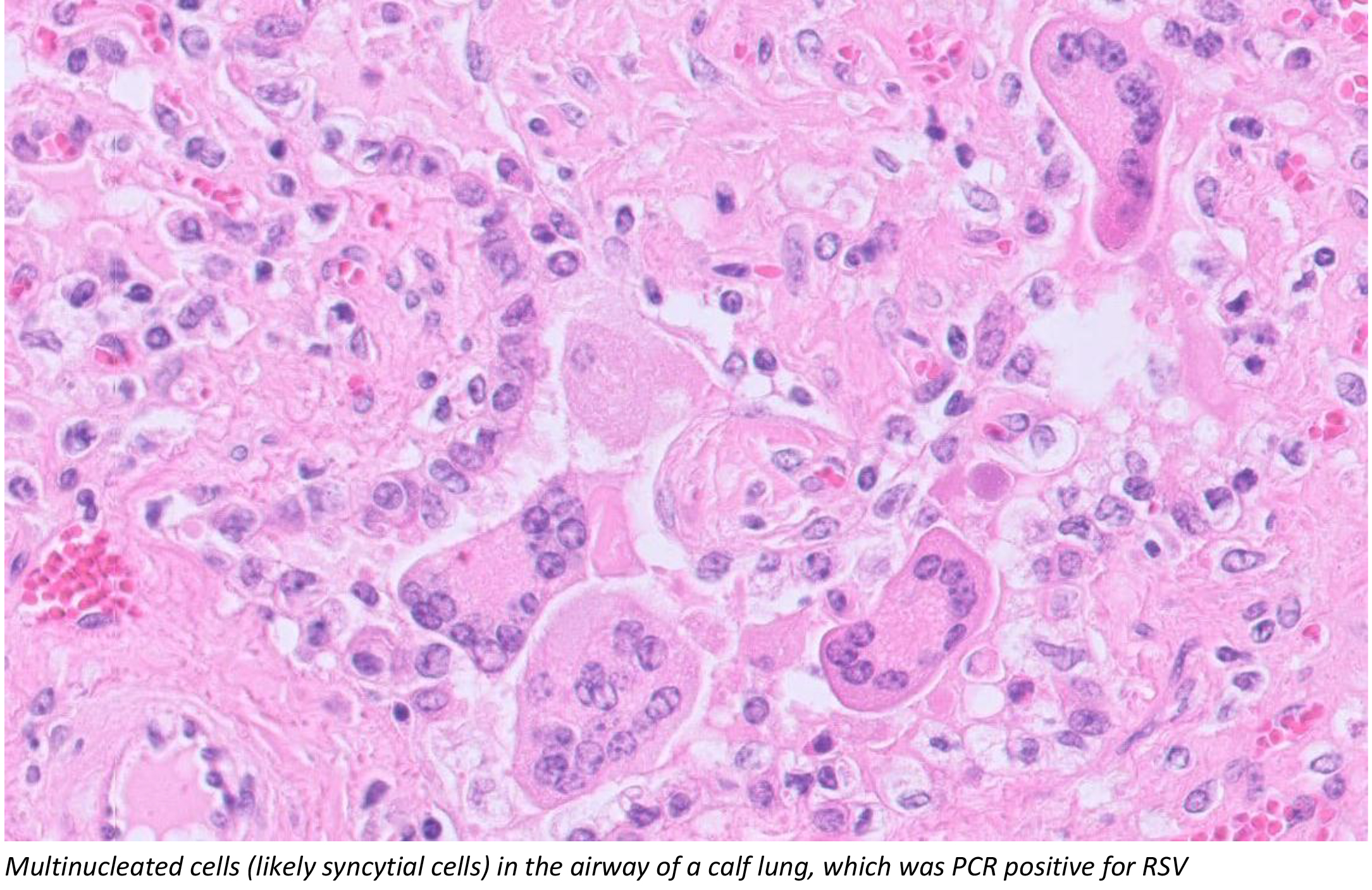
  • RSV was detected in post mortem tissues from a six-month-old Belgian blue cross male calf. There was severe coughing in the group and three calves died overnight. In addition to RSV, Histophilus somni, Mycoplasma bovis and Pasteurella multocida were also detected by PCR testing of lung tissue. Histopathology identified chronic, ongoing changes consistent with enzootic calf pneumonia/bovine respiratory disease complex (BRD). There was a severe and ongoing necrotising bronchiolitis that in calves is normally associated with a pneumotropic viral infection. Syncytial cells were observed supporting the positive RSV PCR result. Secondary bacterial infection was present consistent with the bacterial pathogens detected by PCR. In addition, plasmalymphocytic peri-airway infiltrate consistent with the Mycoplasma bovis PCR result was seen, but it was noted that Mycoplasma dispar, canis, canadensis and/or alkalescens could also be involved.

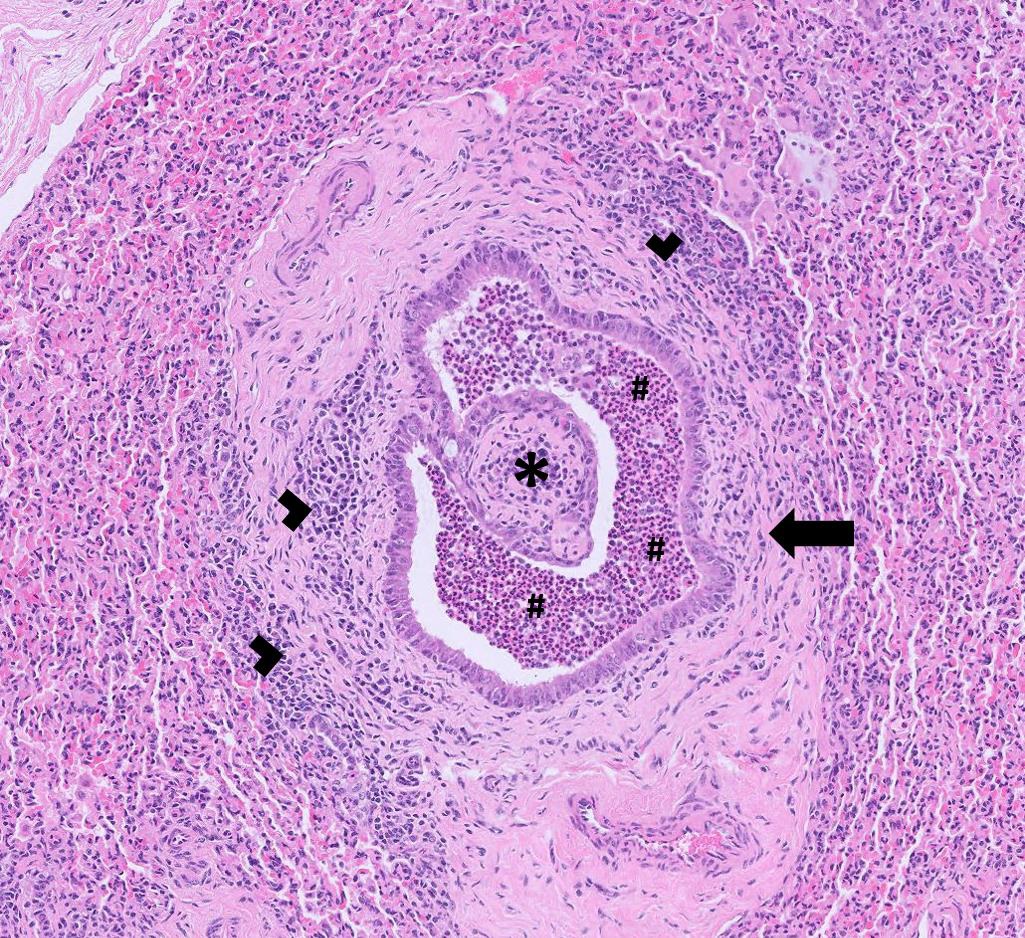
Kidney from a two-month-old suckler calf


Gastrointestinal disease

  • A total of 464 submissions for Johne’s disease serology and faecal PCR testing from cattle were received this month, with 146 submissions, including a total of 284 individual samples, testing positive. Johne’s disease was diagnosed by serology in a yearling bullock that was underweight and scouring and had not responded to anthelmintic treatment. A cow that had twins and then rapidly lost condition and started scouring was euthanased and tissue sent for histopathology. There were gross lesions in the intestine that were identified as multifocal mucosal ulceration and diffuse granulomatous enteritis, the appearance being consistent with a case of Johne’s disease. Special staining identified abundant acid-fast bacteria within macrophages expanding the intestinal submucosa supporting the diagnosis.
  • A strongyle egg count of 600epg was recorded in a group of nine-month-old calves that had received no worming treatment, indicating the likely cause of the reported ill thrift was parasitic gastroenteritis.
  • F5 (K99) E.coli antigen was detected in scour samples from calves less than five days of age which were falling ill and rapidly deteriorating and dying.
  • Yersinia enterocolitica was isolated from a faecal sample from a cow that had calved two weeks previously, had retained placenta and was now scouring. It was thought that the isolate could be of significance in this case of scour. Yersiniosis most often occurs in animals with concurrent disease or those that are immunosuppressed.
  • Salmonella Mbandaka was isolated from faecal samples from Holstein cows with milk drop and rumination drop, pyrexia and scour of five days duration.
  • Salmonella Montevideo was isolated in a case where 60-70 cows in a Holstein herd had blood in their faeces.

Skin and eye disease

  • Listeria monocytogenes was isolated from eye swabs from cattle with conjunctivitis in two submissions.
  • A mass removed from the distal third of a tail of a bovine was identified as a vascular harmartoma by histopathology. It was noted that the method of removal (rubber ring) had resulted in suboptimal tissue preservation in this case, though neoplasia and fibropapilloma could still be ruled out.

Systemic and miscellaneous disease

  • A total of 366 submissions were received for BVD antigen testing in cattle in February, with 29 submissions, including a total of 48 individual samples, testing positive.
  • Babesia sp. were detected by PCR on a blood sample from a cow that had red urine that became port coloured after two days. The mucous membranes were seen to be pale but there was no pyrexia and the PCV was within reference range. Otherwise, the clinical examination was unremarkable. The cow had been housed since November shortly after it calved.
  • Clostridium chauvoei, the cause of clostridial myositis (Blackleg), was detected by FAT testing of smears of affected muscle tissue in a stirk. There had been two sudden deaths in the group of six to seven-month-old unvaccinated stirks.
  • Malignant Catarrhal Fever was diagnosed by PCR testing in six animals from five separate submissions.
  • Tissues and a faecal sample were received from a one-week-old Jersey cross dairy heifer calf that had been sick and scouring for two to three days prior to death. The lungs and liver were grossly abnormal at post mortem examination and a large cystic structure was present close to the gall bladder. The faecal sample tested positive for Cryptosporidium. On histopathology there was an extensive necrosuppurative bronchopneumonia with intralesional bacteria and foreign material in the airways suggestive of aspiration pneumonia. There was also some meconium present indicating a degree distress at calving. In the liver there was minimal multifocal and random suppurative necrosis indicating likely terminal bacteraemia. The cystic structure in the liver was identified as a serous cyst. These are occasionally found attached to the liver capsule in calves, lambs and foals. The origin of these is not known; they may be congenital biliary anomalies or of endoderm origin. These are rarely seen in older animals, which suggests a large proportion of them involute in the early postnatal period.
  • A 13-year-old Belted Galloway cow died and underwent PME. It was noted that the peritoneum was significantly thickened on the hepatic surface and fibrin tags were present around the liver. Although autolysis hampered the examination of tissues, the overall appearance was suggestive of a metastatic neoplasm of uncertain histogenesis, though biliary or intestinal carcinoma were thought to be possible.
  • Hypogammaglobulinaemia was identified in a one-week-old male calf with joint ill and scour. The ZST result was 2 units indicating complete failure of colostral absorption.
  • A gram-negative bacteraemia/septicaemia was found to be the cause of death on histopathology of tissues from a Holstein calf. The calf had had scour at five weeks of age and initially improved but relapsed and died two weeks later. PME identified multiple punctate ulcers in the abomasum, hepatomegaly and severe peritonitis. Microscopically, multifocal mucosal infarction with bacterial emboli and thrombosis were identified in the abomasal tissue. Infarcts at this site can be caused by gram-negative septicaemias and there was evidence of bacterial embolisation associated with the lesions. Vasculopathy was also observed in small intestinal samples that could be linked to the same pathogenesis. However, as vasculopathy may also be caused by BVD virus infection it was suggested that this should be excluded as a possible underlying cause in this case.

Sheep and goats

Abortion, infertility and mastitis

  • Over 50 cases of enzootic abortion were diagnosed this month, predominantly on MZN stains of smears of placentae but also on PCR testing in some cases.
  • Over 25 cases of Campylobacter fetus associated abortion were diagnosed, plus at least three cases of C. jejuni associated abortion and one suspected case of C. coli associated abortion.
  • At least 15 cases of Toxoplasma gondii associated abortion were diagnosed on PCR or foetal fluid serology.
  • Salmonella 61:k:1,5,7 was isolated from foetal stomach contents on at least six occasions. This is a strain of Salmonella enterica subsp. diarizonae, which is sheep adapted.
  • Listeria monocytogenes was isolated from foetal stomach contents on at least seven occasions, including from a goat foetus that was at least one month off term. Typically, infection is associated with spoiled or soil contaminated silage or grazing on muddy ground. One aborting sheep also had profuse diarrhoea.
  • E. coli was isolated from foetal stomach contents on at least six occasions. This may cause sporadic abortions through opportunistic invasion of the gravid uterus following ascending infection.
  • Anaplasma phagocytophilum, the causative agent of Tick Borne fever, was detected on multiplex PCR in at least four cases of abortion. Abortion is a frequent sequel to infection in pregnant ewes.
  • Pasteurella multocida was isolated from the stomach contents of one of three aborted triplets. This is a known but rare cause of abortion in sheep.
  • Coxiella burnetii, the causative agent of Q fever, was isolated from the stomach contents of a lamb foetus, the first abortion to occur this season on an open farm. Q fever is a recognised zoonosis and is reportable to the APHA.
  • Mannheimia haemolytica was isolated from a case of mastitis in a ewe. This is one of the most common causes of severe mastitis in sheep.

Respiratory disease

  • Bacterial bronchopneumonia, likely due to pasteurellosis, was the probable cause of death in an ill thrifty Suffolk cross ewe that had concurrent lungworm infection. A second case of bacterial bronchopneumonia was diagnosed on histopathology in a tup in another flock.
  • OPA with secondary bacterial bronchopneumonia was diagnosed from samples received from one of two ewes examined post mortem in a flock in which there had been increasing mortality in ewes, with animals initially presenting with weight loss and then becoming recumbent and dying. There was evidence of suppurative pneumonia and pleurisy at PME. Infection normally occurs at a young age with progressive neoplastic transformation of pulmonary tissue and the onset of clinical signs normally from two to three years of age. Animals commonly present with exercise intolerance and ill thrift, however if a secondary bacterial pneumonia develops this can often lead to sudden death. In this case, there was evidence of a secondary severe fulminating bacterial pneumonia that would have accounted for the death of the animal.

Gastrointestinal disease

  • Type D clostridial enterotoxaemia was suspected in a goat, which died with haemorrhagic diarrhoea, following the detection of alpha and epsilon toxins in ELISA testing of small intestinal contents.
  • Coccidiosis was confirmed in a two to three-week-old Suffolk lamb that developed dark scour. Over 50,000 opg coccidial oocysts were detected in faeces and histopathology revealed villus atrophy with extensive eosinophilic and lymphoplasmacytic enteritis with intralesional coccidia.
  • Several cases of parasitic gastroenteritis were diagnosed in sheep and goats. A strongyle egg count of 11,450 epg in one sheep in poor condition was suspicious of haemonchosis but peanut agglutinin testing was not carried out to confirm this.
  • Fasciolosis was diagnosed on coproantigen ELISA and microscopy on at least 20 occasions this month.
  • A total of 128 submissions for Johne’s disease serology and faecal PCR testing were received from sheep and goats this month, with 21 submissions, including a total of 24 individual samples, testing positive. Typically, condition loss was the main presenting sign.
  • Salmonella 61:k:1,5,7 was isolated from two neonatal lambs with scour in different flocks. In one case, a three-day-old lamb was sampled at PME after finding evidence of intense congestion and patchy ulceration of the small intestine. There had been 15 lamb deaths from 500 lambing ewes in the flock to date.
  • A Salmonella species was detected by PCR testing of intestinal contents from a ewe, one of three deaths in a flock of 300 ewes, eight of which developed scour post lambing. Unfortunately, the Salmonella sp. could not be isolated on culture and therefore serotyping was not possible.

Skin and eye disease

  • Mycoplasma conjunctivae infection was diagnosed on PCR of ocular swabs on at least three occasions. In all cases, ocular disease appeared to not respond to treatment or recur within days of ceasing treatment.
  • Seroconversion to sheep scab was seen in multiple flocks this month. As in some cases no history was given, it was not clear if positive results were consistent with active infection or persistent antibody levels following successful treatment as positive results can be detected for up to 9 months after successful treatment in some animals.

Skin and eye disease

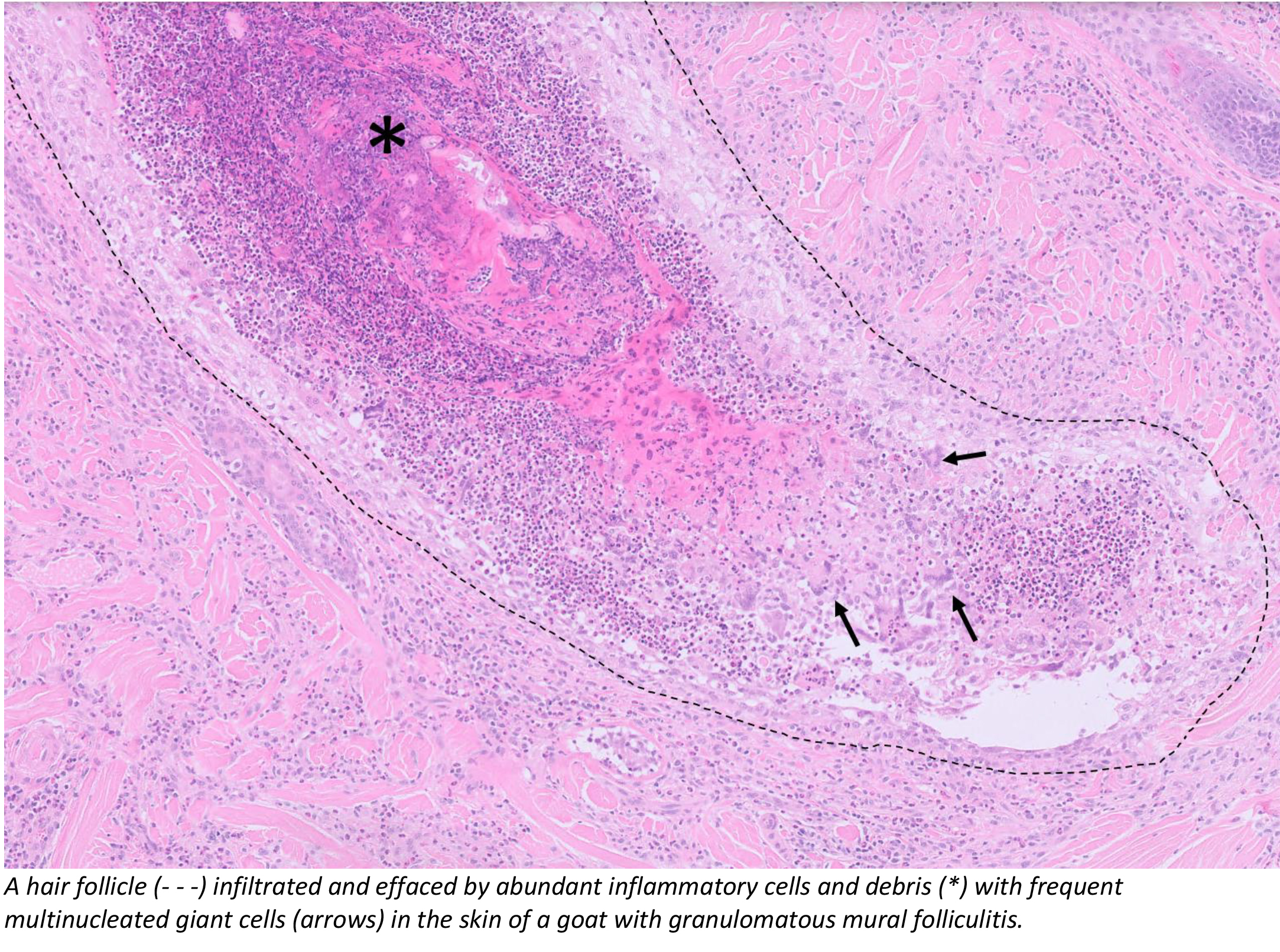
  • Skin biopsies were received from a Boer nanny goat with chronic skin disease, which appeared initially as purulent ulcerated skin before crusting over. The goat had been treated for ringworm, received antibiotics and been treated twice with doramectin, with no improvement. The histological appearance was of a marked granulomatous to pyogranulomatous and eosinophilic folliculitis and furunculosis, possibly with some degree of secondary bacterial infection. The changes were consistent with those described in cases of granulomatous mural folliculitis in goats infected with ovine herpesvirus 2 (MCF) and PCR testing for confirmation was recommended. (Reference: Westermann et al (2023). Granulomatous mural folliculitis in 16 domestic goats: Infection with malignant catarrhal fever viruses and colocalization with ovine herpesvirus-2 using in situ hybridization. Vet Pathol. 60: 876-887).

Brain stem of a sheep with listeriosis


  • Staphylococcus aureus was isolated from an ocular swab taken from a three-year-old ewe from a flock in which 20 sheep had marked conjunctivitis, usually in one eye, the globe being normal but there being marked swelling, epiphora and purulent discharge from the skin. S. aureus is the most common cause of periorbital eczema in sheep. It usually occurs secondary to skin abrasions following trauma, for example in sheep with inadequate trough feeding space. S. aureus, together with Streptococcus uberis were isolated from a skin swab from one of over 150 sheep with swollen lips, 30 of which also had proliferative pustules consistent with pyoderma.
  • Seroconversion to sheep scab was reported in several flocks, with clinical signs including wool loss, scabbing of skin and pruritus.

Systemic and miscellaneous disease

  • Border disease viraemia was confirmed on PCR testing of a serum sample from a hairy shaker lamb on a smallholding with only three ewes. A second ewe in the flock had given birth to weak twin lambs that faded rapidly after birth. A second case in another flock was diagnosed post mortem on PCR testing of spleen from the lamb. Eight further cases were confirmed on PCR testing in a third flock after blood sampling 11 lambs following diagnosis of Border disease in a lamb submitted to the APHA. Several cases of BDV exposure were diagnosed on serology in other flocks.
  • Maedi visna exposure and infection was diagnosed on serology in at least eight flocks.
  • CAE exposure and infection was confirmed on serology in four out of seven adult goats screened in a Saanen herd in which two maiden animals had hard udders suspicious of CAE.
  • CLA was confirmed on culture in a four-year-old Suffolk lamb with an abscess over the jaw. Two further cases were identified on serology – a three-year-old Boer billy and a five-year-old Welsh Mountain ram.
  • Several swabs were received for E. coli culture and sensitivity testing in suspected cases of watery mouth in neonatal lambs. The best site to swab in live lambs is the mouth and, in dead lambs, the abomasum.
  • Streptococcus dysgalactiae was isolated from two cases of joint ill, this being the most common cause in young lambs.
  • Trueperella pyogenes was isolated from the liver of a three-week-old lamb that died acutely and was found to have a swollen liver at PME. Grit from dirty sugar beet was found in the intestines and this may have been the portal for entry of infection.
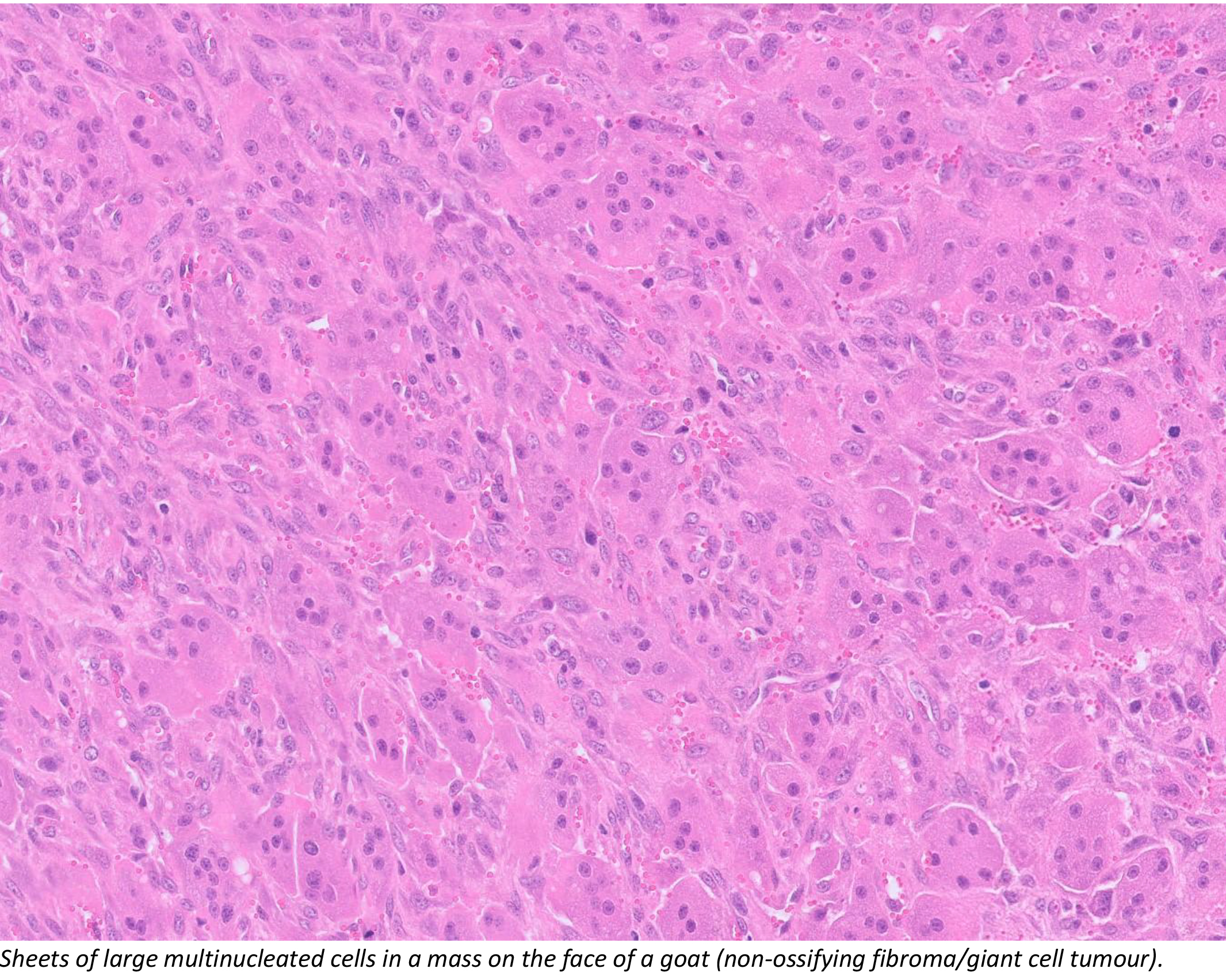
  • A mass on a goat’s face was diagnosed as a non-ossifying fibroma or giant cell tumour. These are most commonly found on the rostral mandible and the exact aetiology/pathogenesis for these lesions has not been ascertained. Prognosis may depend on the ability to successfully surgically remove the entire lesion, but it is often poor as these lesions can be destructive and excision is often not feasible.

Brain stem of a sheep with listeriosis

Deficiencies and toxicities

  • Copper and selenium deficiency along with low urea levels and hypoalbuminemia were identified in a group of poor looking heifers which had low body condition scores and of which a number had subclinical hypocalcaemia at calving.
  • There were low copper levels in all seven cows tested from one farm with 70 suckler cows that had been urine drinking and licking at their mineral lick excessively. Hypocuprosis was also diagnosed in a trace element screen of a group of organic suckler cows. There had been some retained placentas and a couple of ‘dopey’ calves born. In a third case, hypocuprosis was diagnosed in a group of cattle where three of 17 calves born so far were weak at birth. The cows had been fed on hay only over winter. In a case in a goat herd, a one-month-old Boer kid was reported to be intermittently wobbly on its hind legs. The kid had very low copper blood levels of 0.9μmol/l (RI: 9.0-25.00 μmol/l) and the dam was also hypocupraemic with a result of 2.7μmol/l.
  • Copper toxicity was suspected to be the cause of death in a Holstein cow that had shown sudden onset malaise and death within 24 hours and the carcase was very jaundiced at PME. The liver tissue copper level was at a level consistent with copper toxicity. Histopathology findings were of hepatocellular swelling and centrilobular
    necrosis with biliary stasis and rhodanine staining identified positively staining granular material (copper) within hepatocytes, Kupffer cells and macrophages in the portal regions.
  • Hyposelenosis was diagnosed in an eight-week-old Aberdeen Angus calf that had been born unassisted and was previously well but started to show signs of stiffness and pain and was struggling to rise.
  • Selenium deficiency was suspected to be the cause of poor growth rates in ten-month-old animals on a beef rearer unit. Five of the six animals tested had low GSH-Px levels. On another farm, cows were in poor body condition and fertility issues were reported. All five cows tested had low GSH-Px results.
  • Low manganese levels were detected in calves with dwarfism and in heifers with poor conception rates.
  • Hypocalcaemia was identified in a group of heifers in which uterine prolapses were occurring. On another farm, there was a high percentage of cows presenting with retained placenta and one affected animal that was sampled was hypocalcaemic. In a flock of ewes that were six weeks pre-lambing some were reported to have tremors progressing to semi-comatose signs and all three tested ewes were found to be hypocalcaemic.
  • In one submission, there were five downer cows within 24 hours of calving. Four of the five were hypocalcaemic and hypophosphataemic and one had hypomagnesaemia.
  • Hypomagnesaemia was identified in several cases of sudden death in cattle and sheep. A Holstein cross heifer which died suddenly at 200DIM had a magnesium level of 0.36mmol/l in ocular fluid indicating severe hypomagnesaemia.
  • On one farm, there had been multiple down cows in a group of older cows in one field. Two of the cows had hypomagnesaemia and one had a marginal level. Urea levels in the cows were suboptimal suggesting low levels of rumen degradable protein in the diet, likely predisposing the cows to other nutritional disorders. Low urea levels were very common in submissions this month. In another example, freshly calved cows were looking very poor and all five tested animals had very low urea levels. In this case, copper and GSH-Px results were also marginally low.
  • Low T4 levels were found in two suckler cows that gave birth to weak calves that faded and died within 24 hours of birth. Low T4 levels indicate that animals are at increased risk of clinical disease due to iodine deficiency, though other factors such as general nutrition, stage of gestation and concurrent disease can affect T4 levels.
  • Vitamin A deficiency was diagnosed in a two year old male pygmy goat with flaky skin (ectoparasitism had been ruled out) around the head and eyes.
  • Vitamin A deficiency was identified in calves that were suffering with rotavirus scours despite receiving sufficient colostrum from rotavirus vaccinated dams. It was thought possible that low immunity could be increasing susceptibility to enteric pathogens.

Camelids

Gastrointestinal disease

  • Eimeria macusaniensis infection was confirmed with a count of 2150 opg in a faeces sample from an eight-month-old alpaca cria with marked weight loss and severe anaemia.
  • Fascioliasis was diagnosed on microscopy in a male alpaca.
  • Parasitic gastroenteritis was diagnosed in an anaemic, ill thrifty 18-month-old alpaca with diarrhoea and the strongyle count of 4,300 epg was suspicious of haemonchosis. High strongyle egg counts (up to 5750 epg) were also reported in a group of Bactrian camels on routine screening.

Skin and eye disease

  • Follicular cysts were diagnosed on histopathology as the cause of multiple skin nodules in a male alpaca. These are non-neoplastic lesions for which the pathogenesis is unclear and are commonly encountered in species such as dogs, horses and sheep. Several cases have been reported in aged alpacas and they may reflect subtle alterations in keratinisation in the aged animal.
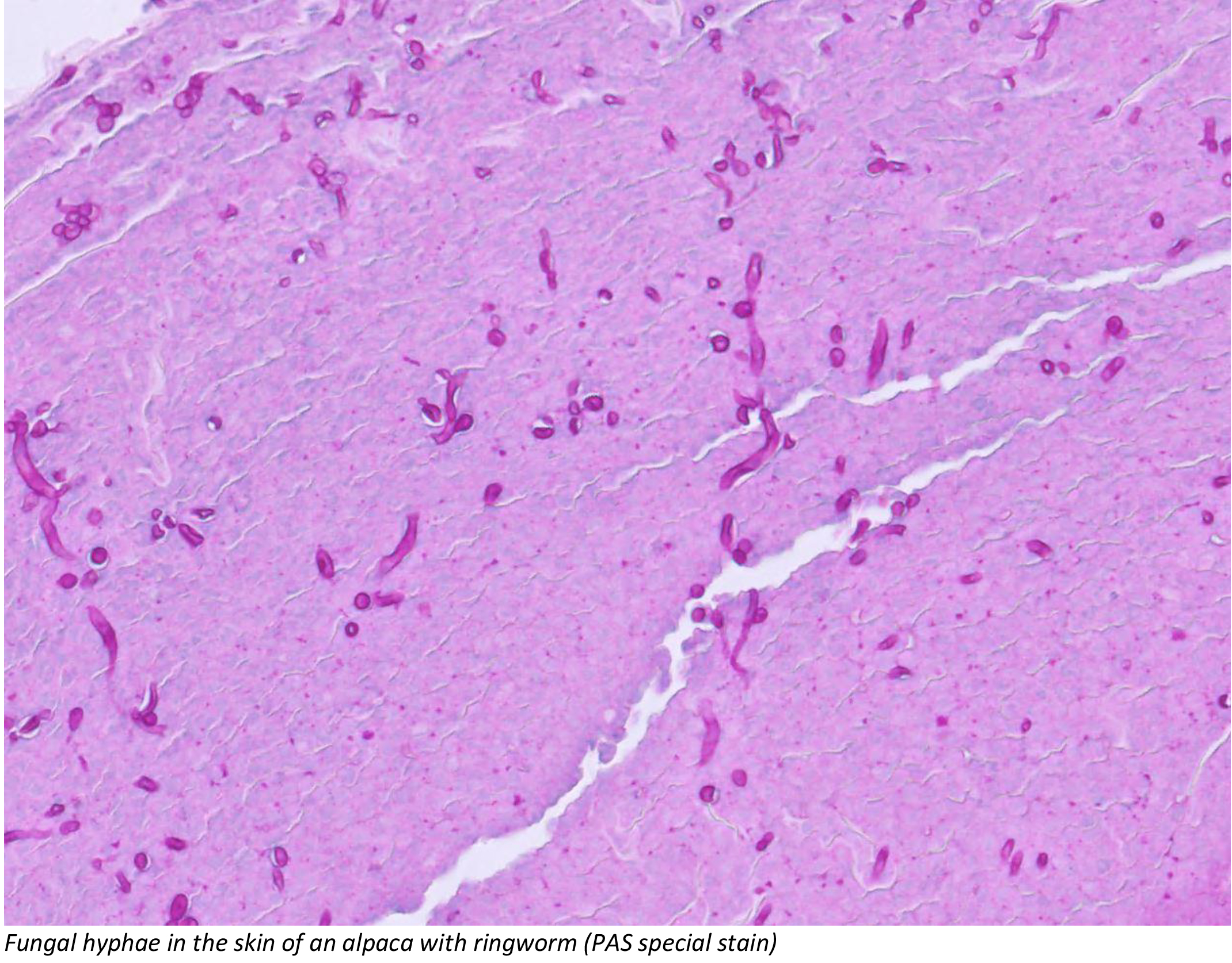
  • Ringworm with secondary bacterial infection was confirmed on histopathology in a pregnant alpaca with lichenification, thickening of the skin and purulent inflammation around the tail head.

Mites in the skin

Other Species

Systemic and miscellaneous disease

  • PME of a chronically bloated pig revealed a dilated spiral colon and rectum and a diphtheritic membrane in the rectum, suspicious of salmonellosis. On histopathology, there was no recognisable rectal or colonic tissue and the entire mucosa and wall had been obliterated by granulation tissue, inflammatory cells and necrotic cell debris. Significant numbers of mixed bacteria were present within this diphtheritic membrane and, on Warthin-Starry silver stain, many of these comprised short bacilli. These changes were compatible with a diagnosis of chronic salmonellosis that was subsequently confirmed on culture. Salmonella can lead to fibrosis and granulation tissue formation in this area, resulting in rectal stricture.
  • Trueperella pyogenes was isolated from a foot abscess in a three-year-old sow.

Follow us on Facebook

https://www.facebook.com/Axiomfarmvetlab/

This newsletter is sent by e-mail to each vet practice but if you would like a copy sent to your individual e-mail account please contact us at dsfarm@axiomvetlab.co.uk and we can add you to our circulation list.

Related Posts