Bone

I. Indications for bone biopsy.

A. Bone tumours

  • Do – particularly when classic radiographic features are not present and evidence of metastatic disease from a primary bone neoplasm is not detectable.
  • Don’t – when limb sparing surgery (tumour seeding risk) or radiation therapy for osteosarcoma is anticipated, presence of severe bleeding disorders or if diagnosis possible by imaging and other methods e.g. cytology alone. 

B. Osteomyelitis

  • Differentiating from neoplasia in osteodestructive bone lesions.

C. Tumour staging

  • Where the tumour is suspected to involve the bone e.g. myeloma, high serum calcium or ALP which may be related to bone neoplasia.

D. Bone marrow evaluation

  • With cytology

E. Metabolic or genetic bone disease

II. How to sample and submit/ sample types

Most biopsies should be undertaken in conjunction with, and directed, by diagnostic imaging. Use radiographic guidance (two views) or direct guidance by CT (bone) or MRI (adjacent soft tissues). Avoid joint spaces or important nerves/ vascular structures. Post procedural diagnostic imaging to ensure the correct/desired area is sampled is recommended where practical.

Biopsy can be performed by open surgery or closed technique with a Jamshidi needle or Michele bone trephine. For central osteosarcomas (most common type), 3 biopsies taken at different locations and in different planes is optimal for diagnosis. A common cause of non-diagnostic samples is failure to penetrate the bone cortex, such that non-specific periosteal reactive new bone is sampled, rather than the primary lesion.

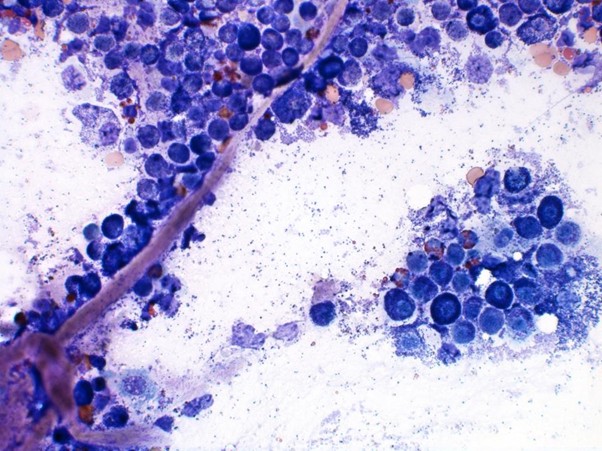
Consider cytology as aspiration is less invasive and can provide similar accuracy identifying tumour type and differentiating benign from malignant bone lesions. Cells from suspected osteosarcoma collected for cytology can also be tested for alkaline phosphatase confirming osteoblastic origin (FNA or impression smear from surface of tumour tissue prior to fixation).

III. Relevant clinical information

  • Fibrous dysplasia, ossifying fibroma, osteosarcoma, metabolic bone disease such as fibrous osteodystrophy and several rare conditions, including the edges of aneurysmal bone cysts, can share histologically similar features, particularly if sampling is not optimal and biopsy specimens are small. A full clinical history can help avoid mis-interpretation from such samples.
  • Signalment (as with any biopsy)
  • Relevant haematology and blood biochemistry
  • Location, size and number of lesion(s)
  • Duration and progression
  • Imaging information is particularly useful (i.e. CT and/or radiographs with interpretation)
  • Clinical differential diagnoses

IV. A few last points

Bone is a dynamic organ constantly responding to physiological and pathological stimuli and it is for both the clinician and pathologist to communicate information to allow responses of normal bone to be distinguished from pathological processes.

Bone is a challenging site to sample. The mix of soft and very hard material in the sample can easily cause crush artefact and/ or produce a non-diagnostic sample. If bone biopsy is pursued infrequently, referral to a clinician/ centre with more experience in the investigation of bone/ orthopaedic disease is worth considering.

V. Case examples and figures

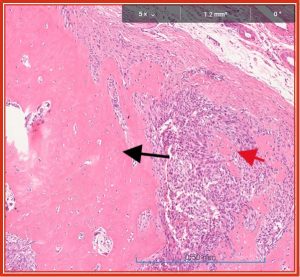
Fig. 1 Osteosarcoma. Black arrow indicates reactive bone progressing in maturity to left. Red arrow is tumour associated osteoid with irregularly spaced immature large osteoblastic cells. Tumour cells fill the medullary space between.
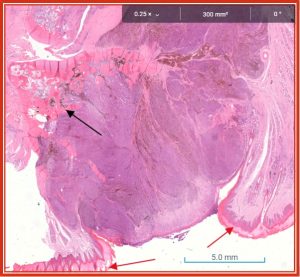
Figure 2. Melanoma of digit replacing the nail and most of the distal phalangeal bone (black arrow indicates bone remnants, red arrows displaced paronychial skin).
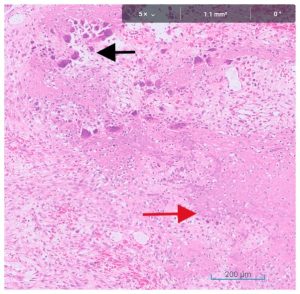
Fig 3. Fibrous osteodystrophy in a case of juvenile nephropathy. Black arrow indicates multinucleate osteoclasts indirectly stimulated by elevated parathormone responding to elevated phosphorus to resorb bone to correct calcium/phosphorus imbalance. Red arrow indicates abundant poor quality osteoid with irregularly spaced osteoblastic cells in an attempt to correct structural integrity. Compare with fig. 1 above where multinucleate osteoclasts remove bone in response to neoplastic infiltration and can also be part of the neoplastic population.
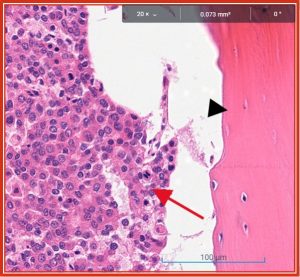
Fig. 4 Metastatic carcinoma (red arrow).
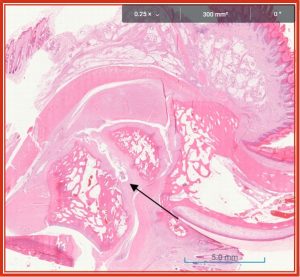
Fig. 5. Pseudo-arthrosis following malunion of fracture in middle digital bone
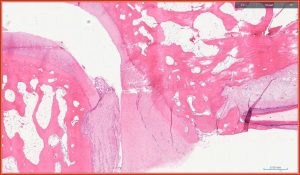
Fig. 6 Joint pannus infiltrating and replacing bone and cartilage on the left of the joint.


VI. References

Surgical Pathology of Tumours of Domestic Animals ed. Kiupel M.

Vol. 4 Tumours of bone, cartilage and Other Hard tissues.  K. Dittmer, P. Roccabianca, C. Bell, B. Murphy, R.A. Foster, J. Scruggs, Y. Schulman, D. Thompson, G. Avallone, M. Kiupel ; [a cura di] K. Matti. – [s.l] : C. L. Davis Thomson Foundation, 2021. – ISBN 9781733749138.

Related Posts